
 by
by “Why is the sky blue?” is one of the first big questions children ask, and one of the last questions scientists fully explained. The answer is not magic — it is physics, and it is surprisingly simple once you understand a few basic ideas about light. Here is the story of why we see a blue sky every day.
Light Is a Mix of Colors
Sunlight looks white, but it is actually a mixture of all the colors of the rainbow. When light passes through a glass prism, it spreads out into red, orange, yellow, green, blue, and violet. These colors together are called the visible spectrum.
Each color is a wave of light. Different colors have different wavelengths:
- Red light has the longest wavelength.
- Blue and violet light have much shorter wavelengths.
Wavelength matters because it determines how light interacts with the tiny particles it passes through.
What Happens to Sunlight in the Atmosphere
As sunlight travels from space toward Earth, it passes through the atmosphere — the layer of gases surrounding our planet. The atmosphere is full of tiny molecules, mainly nitrogen and oxygen. When light waves hit these molecules, they scatter in all directions, like waves in a pond hitting a small rock.
This scattering is called Rayleigh scattering, named after the British physicist Lord Rayleigh, who described it in the 19th century.
Here is the key fact: shorter wavelengths scatter much more than longer ones. Blue light has a short wavelength, so it is scattered strongly. Red light has a long wavelength, so it passes through mostly undisturbed.
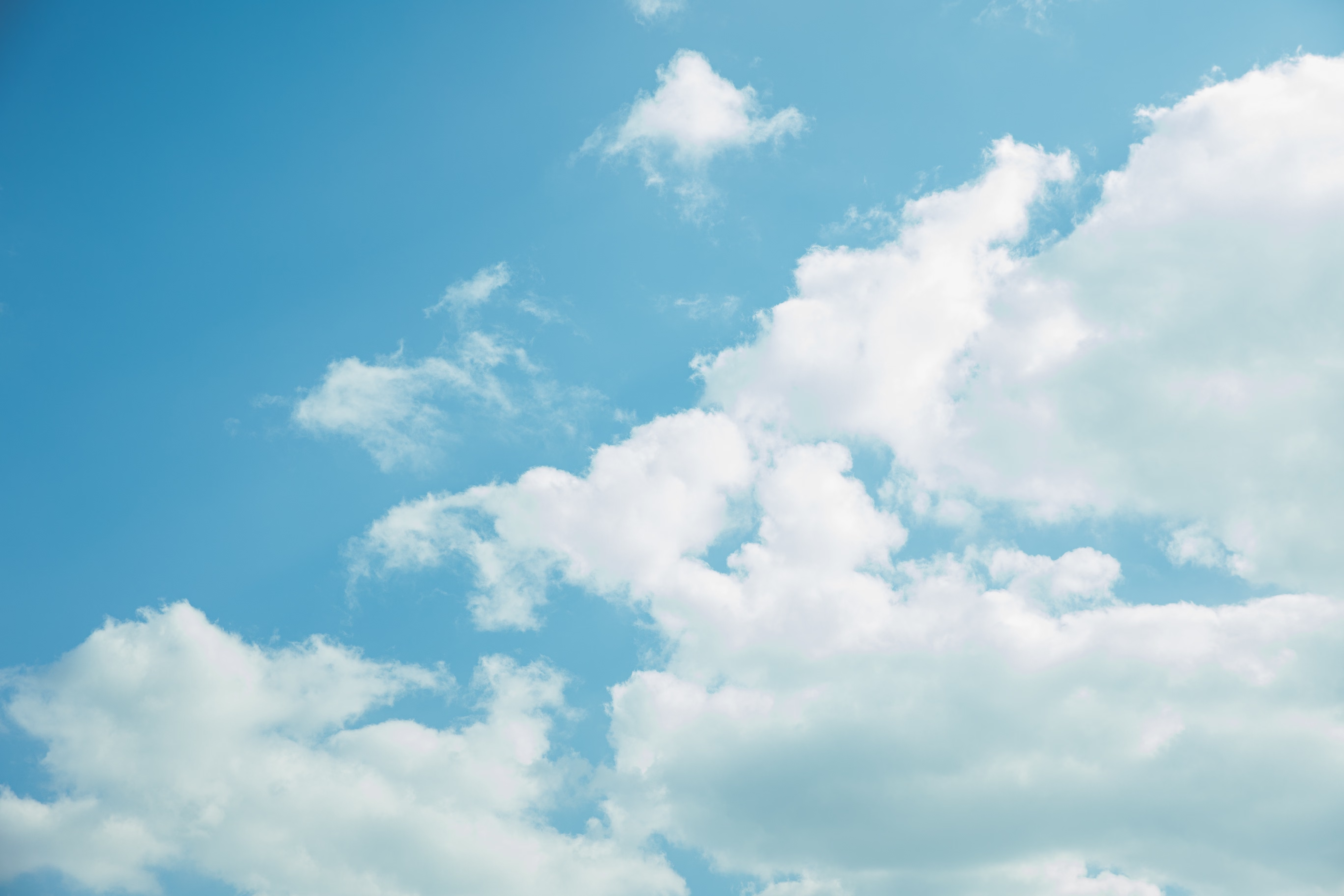
When you look up at the sky on a clear day, you are seeing sunlight that has been scattered by countless air molecules all across the sky. Because blue light scatters the most, the entire sky appears blue — regardless of which direction you look.
Why Blue and Not Violet?
If violet light has an even shorter wavelength than blue, why is the sky not violet? Two reasons:
- Sunlight contains less violet light than blue light to begin with.
- Our eyes are less sensitive to violet. The human eye has cells that detect blue light much more strongly than violet.
So although some violet light is scattered, the blue dominates what our eyes perceive.
Why Sunsets Are Orange and Red
If the sky is blue overhead, why do sunsets look orange, pink, and red? The answer is the same scattering process — but with a different path.
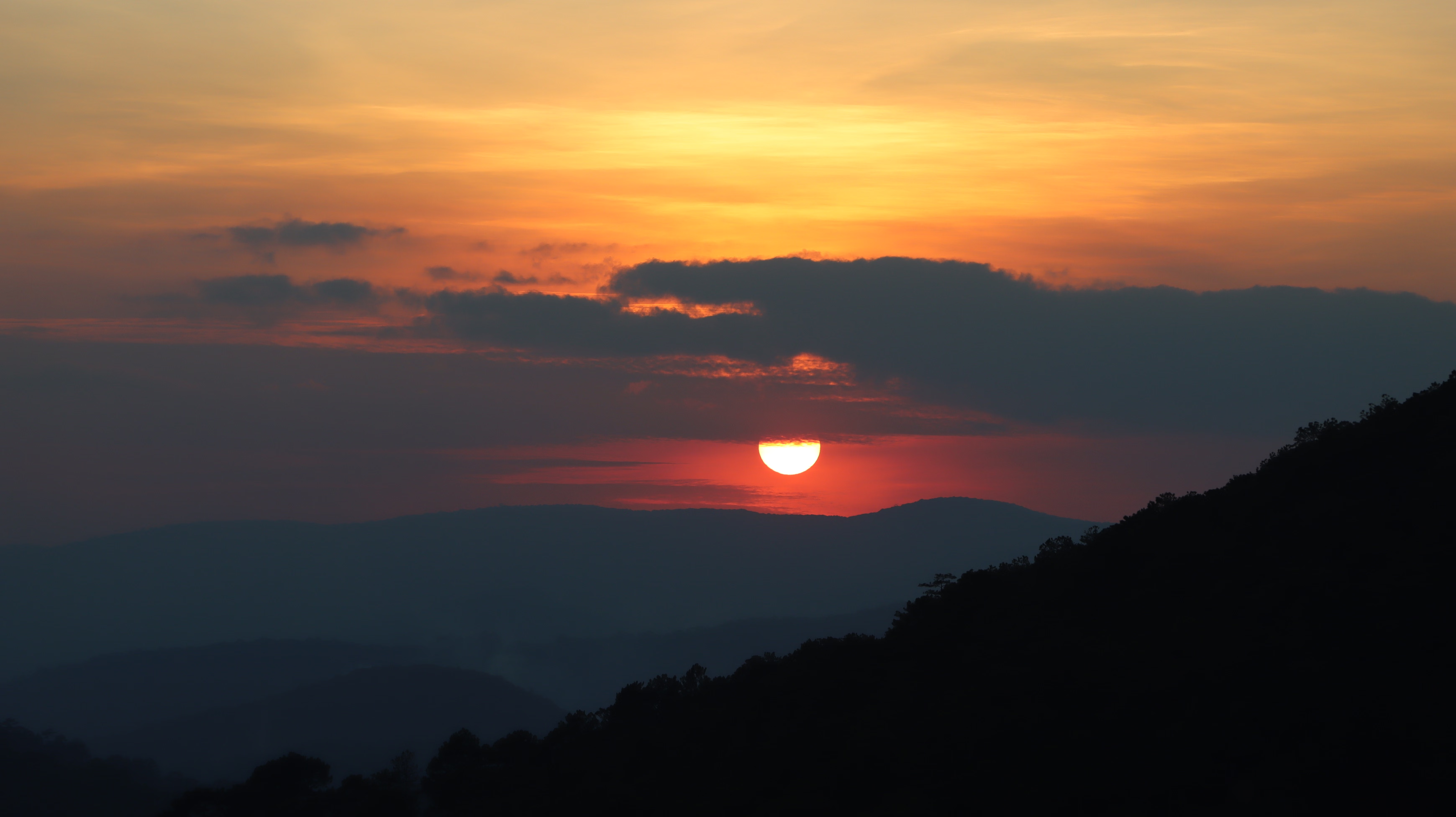
At sunset, the sun is low on the horizon. Its light must travel through much more atmosphere to reach your eyes than at midday. Along this longer path, almost all the blue light is scattered away — by the time it reaches you, blue is mostly gone.
What remains is the longer wavelengths: orange and red light, which scatter less and travel farthest. That is why the setting sun and the sky around it glow in warm colors. Clouds at sunset act like screens, reflecting this orange-red light back to you in dramatic displays.
Why Other Planets Have Different Sky Colors
The sky’s color depends on the atmosphere. Mars, for example, has a thin atmosphere full of fine dust particles. Its sky can appear butterscotch-colored or dusty red during storms, because dust particles are much larger than air molecules and scatter light differently — a process called Mie scattering, which affects all wavelengths more evenly.
If our atmosphere were made of different molecules, or contained more dust, the sky could look entirely different.
Why It Matters
Understanding why the sky is blue connects to deeper ideas in physics, from the nature of light to the composition of our atmosphere. It also explains other everyday observations:
- Smoggy or hazy days look whiter because larger pollution particles scatter all colors evenly, washing out the blue.
- Deep blue skies right after a storm appear because the air is cleaner, leaving only the small molecules that scatter blue light best.
Conclusion
The blue sky is not a property of the sky itself — it is a consequence of how sunlight interacts with the air. Short-wavelength blue light scatters far more strongly than red light when it collides with gas molecules, filling our view with blue. At sunrise and sunset, a longer journey through the atmosphere strips away that blue, leaving the warm reds and oranges we love. The next time someone asks why the sky is blue, you can give them the whole story — in one breath.
This article is for general informational purposes only.


